
Seafood industry performance: Key findings, leading practices and recommendations
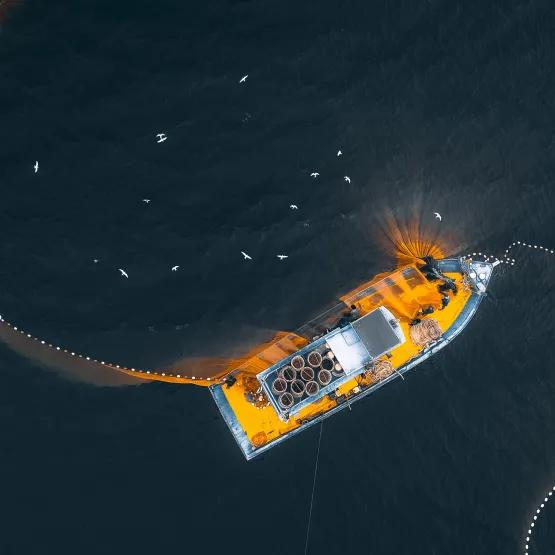
In 2026, the Ocean Benchmark assessed 22 seafood companies. This article highlights key findings from the seafood industry, showcases leading practices, and outlines recommendations for action. Learn more about the Ocean Benchmark's scope and methodology here and explore the wider ocean benchmark findings here.
Summary
Mowi stands out as the clear leader across all benchmarks—social, nature, food and agriculture, and ocean—demonstrating consistently strong performance across a wide range of sustainability topics. Nueva Pescanova also performed strongly, ranking consistently within the top five seafood companies across all four benchmarks. In terms of regional performance, Europe leads with an average score of 27 out of 100, closely followed by Asia at 22 out of 100. North America, however, lags significantly behind, with an average score of just 4 out of 100, highlighting a substantial performance gap across regions. Looking at topic-specific trends, companies tend to perform similarly on ecosystem-related and core social topics, both averaging 22 out of 100. However, performance drops markedly when it comes to ocean-specific social responsibility indicators, where the average score falls to just 9 out of 100. This weaker performance reflects ongoing challenges in areas such as forced labour and working conditions on vessels.
- Governance: Executive boards increasingly recognize sustainability as material but struggle to translate it into concrete targets and plans.
- Climate: Despite climate change being an existential threat to the seafood industry, very few seafood company report actual progress towards reducing GHG emissions.
- Nature: Seafood companies make progress towards assessing their nature-related risks, impacts, and dependencies but disclosure of actions and progress remains slow.
- Social: Overall performance improves on key social topics such as human rights due diligence and forced labour, but on average, remains low across social topics.
A closer look at the findings
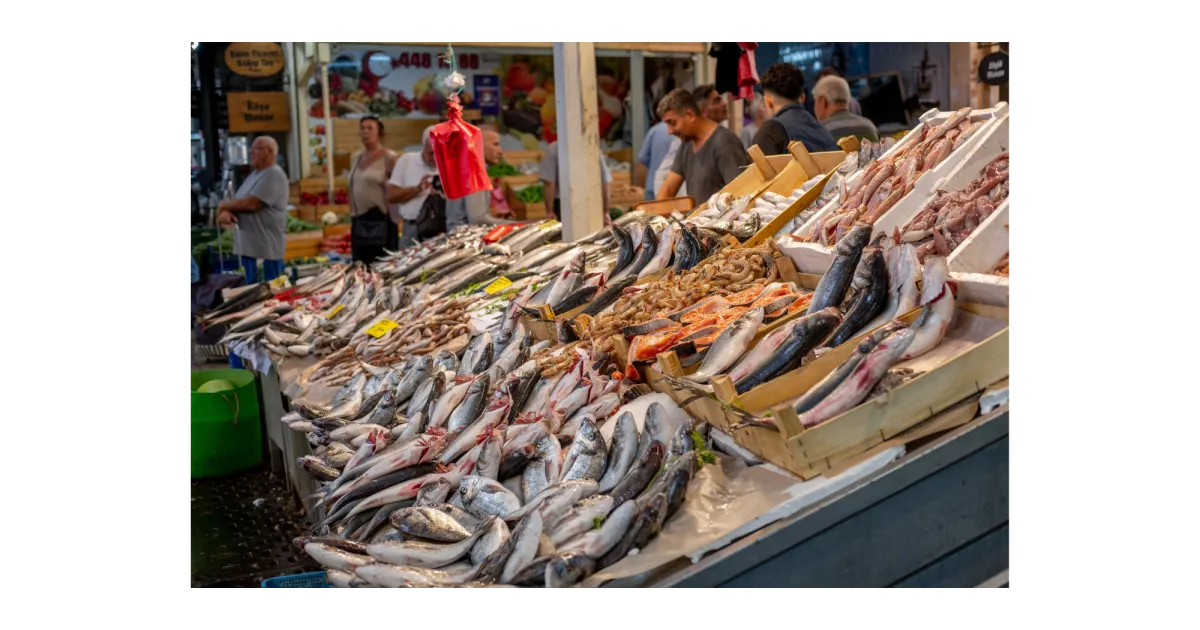
Corporate governance matters for sustainability because it determines whether environmental and social goals are integrated into real decision-making or remain superficial statements. Boards and executives control how risks like climate change, labour abuse, and supply chain impacts are identified and managed. It also shapes incentives through compensation and performance metrics, which strongly influence corporate behaviour. Strong governance improves transparency and accountability, reducing greenwashing and improving trust from investors and regulators. Overall, it ensures sustainability is treated as a core business responsibility rather than a voluntary add-on.
While most companies carry out materiality assessments and disclose which stakeholders are involved in the process, only a small minority (6 out of 22) disclose a clear strategy to address their most material impacts. In terms of accountability, although sustainability responsibility is often assigned to the highest governance body, none of the companies demonstrate that this body has specific expertise in the most material sustainability topics. Finally, very few companies (fewer than 4 out of 22) disclose concrete sustainability targets, implementation plans, or progress reporting for their most material issues. Nissui and Maruha Nichiro both performed particularly strongly on governance topics. For example, Maruha Nichiro and Nissui both disclose action plans for implementing their sustainability strategy and publish a detailed progress report. Overall, there is a gap between identifying sustainability priorities and embedding them into board-level expertise, strategy, and measurable action.
Call to action: Corporate leadership must embed sustainability into corporate governance by aligning strategy, risk management, and incentives with environmental and social goals. Clear accountability, robust oversight, and transparent reporting are essential. By integrating sustainability into decision-making, boards can strengthen resilience, protect long-term value, and position their companies competitively in rapidly evolving markets.
Climate change threatens fish stocks, ocean ecosystems, and long-term supply stability. Warming and acidification are shifting species and reducing catch predictability. Aquaculture faces rising disease risk and lower oxygen levels. Extreme weather damages infrastructure and raises costs, while regulators, buyers, and investors increasingly demand climate risk disclosure and management.While most seafood companies have a commitment towards decarbonization and report their GHG emissions, onl 3 companies report actual progress towards reducing GHG emissions.
For more detailed results on how seafood companies are progress on their climate transition, please consult our 2026 ACT Core results.
Seafood companies rely on healthy ecosystems. Overfishing, habitat loss, and biodiversity decline reduce stocks, increasing costs and uncertainty. Mangroves, reefs, and seagrass support key species, so degradation weakens supply chains. At the same time, regulators, retailers, and investors increasingly expect companies to prevent biodiversity loss and actively manage nature-related risks within their supply chains and operations.
As nature increasingly rises on financial and regulatory agendas, a few seafood companies have started to improve their assessment of nature-related risks, impacts, and dependencies (Figure 2). Compared to 2023, three companies assess their reliance on ecosystem services, and two have evaluated nature-related risks, up from none in the previous assessment. For example, Mowi conducted a LEAP assessment to assess its impacts drivers, risks and dependencies. While a small share of companies (5 out of 22) consider impact drivers affecting ecosystem health and 8 out of 22 identify proximity to ecologically sensitive areas, none conduct comprehensive evaluations of their actual impacts on ecosystems and species.
Despite this positive progress on nature assessment, disclosure of actions to address these issues remains weak overall and the seafood industry continues to trail behind other nature-dependent industries such as forestry and broader food production. Only 20% of companies in the seafood value chain (n=119) report on the sustainability of their seafood products.
Traceability stands out as an important differentiator: companies with stronger commitments and clear implementation plans (such as Cermaq, Thai Union and Nueva Pescanova) tend to perform better on ecosystem-related indicators, although most still fail to report transparently on progress. Overall, there is widespread commitments to traceability but detailed implementation pathways and updates remain uncommon.
Call to action: Companies should assess your impacts, risks and dependencies on nature and develop nature transition plans – what it is, including key frameworks and guidance, including ocean specific guidance:
- TNFD additional guidance for the fishing and aquaculture sectors ocean (including the LEAP approach).
- WWF Pathways for corporate contributions towards nature positive for the ocean (including the seafood sector)
- SBTN Ocean Hub guidance for the seafood sector on setting science based targets
- Global Dialogue on Seafood Traceability to improve traceability systems in support of better nature related assessment
Segments of the seafood supply chain, particularly distant-water fishing and processing, carry risks of forced labor, human trafficking, and unsafe working conditions. At the same time, companies face increasing scrutina and legal obligations under EU and national due diligence laws to improve their human rights due diligence, while market pressures demand ethical sourcing. Beyond compliance, addressing these risks is likely to improve supply chain stability, reduces reputational damage, and strengthens long-term resilience.
Overall, the companies assessed have shown some improvements across key social topics, including human rights due diligence, forced labour prevention, and working conditions on board vessels, although average performance remains low.
On human rights due diligence, seafood companies have improved on average and now perform at a similar level to other high-risk industries such as apparel, and ahead of metals and mining. Nueva Pescanova, Mowi and Thai Union are the currently most advanced on implementing human rights due diligence, making steps towards identifying, assessing, integrating and acting on human rights risks and impacts.
However, despite these gains, very few companies disclose concrete actions or measurable progress toward eliminating forced labour (Figure 5). Only four companies prohibit suppliers from charging recruitment fees, restricting workers’ freedom, or delaying wages—up from two in 2023—and just two companies disclose how they actively work with business partners to eliminate forced labour, compared to one in 2023. Thai Union and FCFcurrently lead on this topic.
Similarly, more companies are taking steps to improve working and living conditions on board vessels: five companies now demonstrate concrete actions in this area, up from three in 2023, and eight companies have formal commitments, compared to five in the previous year.
Call to action: a sustainable and resilient seafood industry cannot be achieved if it is not done justly and while ensuring human rights are respected. Expectation on human rights are rising and companies have a duty to ensure human rights. Companies must make sure that respect for human rights is a non-negotiable foundation of their business strategy, with the first step being to carry out robust human rights due diligence, including putting in place robust grievance and remedy mechanisms. Some initial guidance and initiatives include:
Towards integration of climate, social and nature transitions
Ocean industrys, including seafood, are at the forefront of the triple crisis that we face today as it is highly dependent on healthy ocean, stable climate and resilient supply chains, including a stable workforce. This means that large influential seafood companies have a responsibility but also an opportunity to significantly contribute to a more sustainable and responsible ocean economy. Indeed, the ocean, if managed sustainably, can provide sustainable employment, feed billions of people, and help mitigate climate change. To effectively address the triple crisis, seafood companies must think in an integrated manner and consider how their actions towards nature, climate and people interact with each other. We found that 2 seafood companies have started to demonstrate integrated thinking, namely Thai Union and Mowi, who disclose the alignment or tradeoffs between their nature and climate transition plans. The next step will be to integrate nature and climate transition, while doing it in a just manner. In 2027, WBA will be moving towards using an Integrated Transition Assessment Framework, which will assess companies on how they are approaching the triple crisis in an integrated manner.
Latest Updates

Subscribe to stay informed on our work
Keep up to date with all the latest from World Benchmarking Alliance