
EU regulations will raise the bar on living income - and most food companies still have work to do
Across global food and agriculture supply chains, millions of smallholder farming households earn below what a decent standard of living requires. Our new assessment of the world’s 350 most influential food and agriculture companies suggests that, while the sector is paying more attention to living income, this is not translating into meaningful corporate action.

From definition to action: the state of corporate commitment on living income
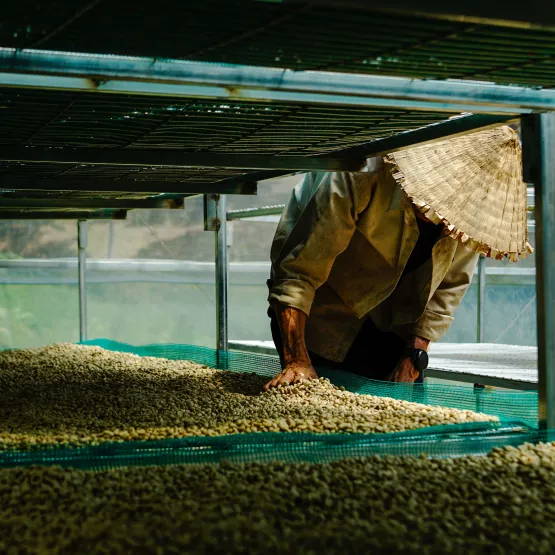
Living income as a concept is straightforward in principle: a farming household should earn enough to afford a decent standard of living considering the prevailing cost of goods and services in a given country or region. A living income is rarely attained by the sale of agricultural commodities alone. For small-scale farmers, it often involves a combination of several sources of income, including selling cash crops, producing staples for the local market, and working off-farm jobs.
Companies with farmers in their supply chain have a share in the responsibility to ensure that they can achieve a living income, especially in sectors in which small-scale producers prevail, such as coffee, cacao, or palm oil. Companies can contribute to this by paying a fair price for the products, promoting crop diversification, supporting technical assistance, or implementing programmes to improve farmers’ capacities and access to credit.
WBA’s Food and Agriculture Benchmark assessed corporate action on living income by assessing the public disclosure of 350 of the world’s most influential food and agriculture companies in 2025. Of these, 300 companies belong to subsectors whose supply chains rely directly on farmers and their commodities — food and beverage manufacturers/processors; agricultural products & commodities; animal protein manufacturers/processors; and food retailers — and are therefore expected to take action on living income.
Our assessment took a step-wise approach reflecting increasing levels of ambition: first, we examined if the company has a definition of living income using a recognised benchmark, such as that of the Anker methodology; second, whether it measures the gap between current earnings and that benchmark; third, whether it designs and implements a programme to close that gap; and finally, whether it has a monitoring system to track progress.
Overall, we found that only a small minority of companies (18 companies, or 6%) have any relevant disclosures mentioning living income. Of those which do disclose, most are failing to move from defining living income to closing the gap.
For the majority of companies, the distance between what farmers in their supply chains earn and what a decent life costs remains unknown and untracked. Of 300 companies, only 11 define living income using a recognised benchmark, the foundational step for gap measurement and targeted action. Only 8 companies actually measure living income gaps in their supply chains.
Only 3% of companies (9 in total) run programmes specifically aimed at closing living income gaps — a share that has remained largely static since our previous assessment in 2023. These companies are mostly food manufacturers and processors headquartered in Europe. Within this small group, only 3 (Barry Callebaut, Mars, Nestlé) have time-bound strategies and only 4 (Barry Callebaut, Hershey, Nestlé, Olam) monitor progress against their goals. Even the companies which are making the most progress on this issue have yet to fully operationalise living income as a measurable corporate commitment.
From intention to impact: what livelihoods programmes reveal
Whereas focused action on living income is rare, many companies are paying attention to the broader livelihoods of farmers in their supply chains: 104 companies (35% of 300) disclose livelihoods programmes targeting farmer income or its underlying levers, even if these vary considerably in depth and effectiveness.
The most common programme types focus on farm-level improvements (78 companies) and income diversification (42 companies). Responsible pricing and purchasing practices are among the other commonly disclosed programme types (73 companies), which is an encouraging signal, as these address the terms of trade rather than just the technical capacities of farmers. When combined with investment in farmer capacities and supply chains, purchasing practices represent a more structural response to income shortfalls.
The stated goals of livelihoods programmes implemented by the 104 companies vary, including farmer capacity building, yield or productivity gains, income increases, and living income targets. While 58 companies include an explicit income goal in their livelihoods programmes, only 18 disclose an intention to close living income gaps. Just one company across the entire benchmark sets a clear goal to lift farmers out of poverty. This reveals a systemic disconnect: companies are setting income targets without benchmarking them against the actual cost of living.
Due diligence as a meaningful enabler
Linking the performance of companies in the Food and Agriculture Benchmark with the results of WBA’s Social Benchmark suggests that due diligence processes are associated with a higher likelihood of disclosing livelihoods programmes.
Of the 300 companies whose supply chains rely directly on farmers and their commodities, 99 disclose Human Rights Due Diligence (HRDD) results. Yet only 26 — just 9% of the 300 — explicitly identify farmer livelihoods or income as a salient human rights issue. Among those 26 companies, 70% disclose livelihoods programmes, compared to 42% (31 of 73 companies) among those that do not make this identification.
Most tellingly, all 9 companies with living income gap-closing programmes perform at least one of the first three due diligence steps — identifying, assessing, or integrating human rights risks and impacts. Companies such as ECOM Agroindustrial, Hershey, Mars, and Nestlé identify living income as one of the salient issues in their supply chains and implement programmes to close living income gaps. Outcome-oriented livelihoods action rarely emerges without some foundation of systematic risk governance. Companies that have not mapped risks, or have not treated income as a salient human rights issue, have uniformly failed to build programmes that close gaps.
What this means and what comes next
Living income has gained substantial discursive traction — as evidenced by the upcoming second Living Wage and Living Income Summit taking place in Rotterdam on 30th June. It appears in corporate strategies and sustainability reports, but it has not gained operational depth: systematic gap measurement, time-bound programme goals, outcome monitoring, and integration with the risk governance processes that give corporate commitments institutional grounding. Only 9 companies out of 300 are working to close living income gaps — a number that has not grown since we last assessed companies in 2023.
That gap in company actions is now meeting regulatory and investor pressure. The Corporate Sustainability Due Diligence Directive (CSDDD) signals a clear direction: identifying and addressing living income risks is becoming a legal expectation for large companies operating in EU markets. The Guidelines for a Living Income in the CSDDD set out what meaningful compliance looks and make clear that compliance requires more than programme activity — companies must demonstrate effective monitoring and accurate, transparent reporting accessible to affected stakeholders. Our data suggests that companies already engaging in robust HRDD are better positioned to meet these expectations. The majority are not, and face a narrowing window to build the foundations the regulatory environment now demands.
WBA and WBCSD will be hosting a breakout session at the upcoming Living Wage & Living Income Summit 2026, organised by IDH. The session Investing in the business case for Living Wages & Income will bring together companies, investors, and practitioners to explore how living wage and living income commitments translate into business value and supply chain resilience.
WBA's Food and Agriculture Benchmark
This analysis draws on data from WBA's Food and Agriculture Benchmark, assessing 350 companies across the global food and agriculture sector.
Latest Updates

Subscribe to stay informed on our work
Keep up to date with all the latest from World Benchmarking Alliance