State of play of corporate performance on living wages
WBA’s 2026 assessment of the world's 2,000 most influential companies shows both momentum and concern. Living wages remain the exception rather than the norm, underscoring a persistent corporate accountability gap that needs system-wide action.
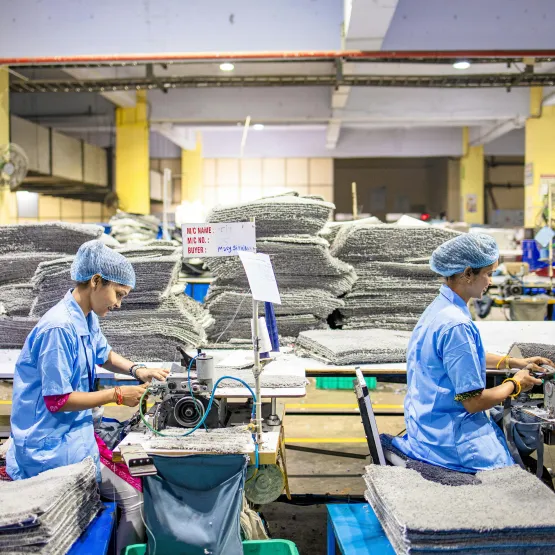
The world is no longer facing a temporary cost-of-living crisis, but reflects deeper structural failures that are driving poverty and weakening social cohesion. For many workers, particularly in the Global South, a decent standard of living has never been attainable. Today, half of all wage workers in low-income countries earn less than USD 201 (PPP) per month, and 284 million workers still live in extreme poverty.
The baseline remains low
Fewer than 5% of companies disclose that they guarantee a living wage for their direct workforce, and only 3% report taking action to support living wages in their supply chains. This is particularly concerning given that these companies together employ more than 107 million workers directly and influence over half a billion more through global supply chains, underscoring both their impact and how far corporate practice still lags behind emerging global expectations.
WBA will reassess 2,000 companies in 2028. The challenge is can we move from a 5% baseline to at least 25% of companies taking credible action?
Signs of progress – modest but measurable
Between the 2024 and 2026 publications, there are signs of progress:
- More companies guaranteeing a living wage: 47 additional companies now disclose achievement of, or credible pathways toward, living wage coverage for their workforce, bringing the total to 91 companies. Of these, 74% are headquartered in Europe, suggesting the influence of stronger due diligence and reporting regulation.
- Growth in first-step action: 44 additional companies now meet at least one living wage element, to meet a total of 185 (+31%).
- Sharp rise in methodology uptake: 131 companies now disclose the dataset or methodology they use, up from 49 companies in 2024 (+167%). The most widely cited include Fair Wage Network, Anker methodology, Living Wage Foundation Benchmark, and Wage Indicator Foundation.
Some backsliding is evident. We identified 42 companies that no longer meet the benchmark criteria. This was largely driven by the adoption of a more rigorous methodology and stricter requirements which align with international standards. For instance, committing to living wage principles is no longer accepted unless it is backed with a target and concrete plans. However, a small number of companies even weakened or withdrew their commitments. Four U.S. companies (Arconic, América Móvil, General Motors, Valero Energy) and one European company (ACCIONA) moved from concrete living wage disclosures to either no reporting or language that shifts away from living wage, using terms such as “equitable salaries” or “meeting basic needs.”
Beyond the usual suspects – the “untapped middle”
Beyond leaders and laggards, 214 companies show early engagement but fall short of credible implementation. Common gaps across the companies include :
- Aspirations without targets: 82 companies express intent but set no timelines or measurable commitments.
- Misaligned definitions: 50 refer to “fair” or “adequate” pay rather than living wages aligned with international standards.
- Fragmented implementation: 34 limit efforts to pilots or specific geographies.
- Limited wage policies disclosed: 50 companies disclose wage policies but limit them to performance-based remuneration, market competitive salaries, or equitable pay.
Through targeted engagement and capacity-building, these companies can move from intention to credible implementation, unlocking significant progress across the broader corporate middle.

Supply chains – high risk but limited action
Wage risks are most acute in supply chains. Yet, only 49 companies currently meet expectations on living wage in supply chains. Emerging practices shows how companies can tackle this:
- Offering trainings on living wage standards and approaches (Nestle)
- Working with suppliers to calculate wage gaps and revise remuneration plans (Unilever)
- Enabling conditions for collective bargaining in supply chains (Inditex)
- Auditing suppliers for compliance with wage practices in code of conduct/legislations (Acer)
- Ending supplier relationships/contracts for non-compliance (Puma)
- Insurance and microfinance tools that enable fair and timely payments for workers (ALDI Nord)
- Long-term purchasing agreements that reward good wage practices (H&M)
Scaling these approaches will require stronger peer exchange and collaborative action across industries to move from isolated examples to systemic change.
Minimum wage compliance is not enough
528 companies report compliance with national minimum wage laws, yet legal minimum wages often fall well below living wage benchmarks.
There are some signs of the policy effect – such as 8% of European companies meet the living wage benchmark - where statutory minimum wages more often align with living wage levels- compared to just 2% in other regions. Governments must raise minimum wage levels toward living wage levels, shifting the issue from voluntary ambition to mandatory expectation.
Furthermore, voluntary leadership beyond minimum wage is rare, but evident: For example in India, 21 of 84 companies report minimum wage compliance, but only two disclose a target or already paying a living wage (JSW Energy, Godrej Properties). Similar examples of companies disclosing a target or paying a living wage can be seen in Brazil (Vale, Lojas Renner, Natura), the Philippines (PLDT), Thailand (Mitr Phol Group, PTT), and Mexico (Grupo México).
Workers voice is a strong enabler of real outcomes
Companies meeting collective bargaining disclosure requirements are three times more likely to guarantee a living wage, and those supporting business relationships on collective bargaining are more likely to also support living wage initiatives.
However, still less than 30% of companies disclose the percentage of their workforce covered by a collective bargaining agreement, and only 1% disclose actions taken to support business relationships in fostering freedom of association and collective bargaining. The evidence is clear that living wages are not simply a compliance exercise nor should be treated as stand-alone CSR commitments, but the outcome of effective social dialogue and tripartite consensus between governments, employers and workers. Companies and governments must continue to work closely with wage-setting institutions like the International Labour Organisation (ILO).
From 5% to 25% - scaling corporate action by 2028
The direction of travel is clear. Global policy momentum is strengthening, including recognition in the Doha Political Declaration, the 2024 definition and principles from the ILO, as well as enhanced wage-related disclosure expectations from the Global Reporting Initiative and the International Sustainability Standards Board.
Companies must now develop time-bound plans, embedding living wages into core strategy, and extending implementation across supply chains. This is foundational to resilient economies and central to the credibility of climate and digital transitions.
Together with partners including the IDH, the United Nations Global Compact, and the World Business Council for Sustainable Development and more, we are working to ensure living wage can - and must - become the next transformative shift in sustainable development.
Read our call to UN Member States implementing the Doha Declaration on living wages.
Latest Updates



Subscribe to stay informed on our work
Keep up to date with all the latest from World Benchmarking Alliance