
Leave no one behind: Why people must come first in the global transition


An operational framework
The global transition is moving faster than efforts to bring everyone along. Amid climate change, technological advances and growing geopolitical division, companies are navigating simultaneous energy, digital and economic transitions that risk deepening inequalities. As such, the choices companies make along the way will decide whether these transitions are socially inclusive or leave people behind.
A just transition, in which the benefits and costs of change are shared fairly, should underpin every one of these transitions. Getting there means the principle of Leave no one behind must become more than a commitment to protect people from the negative consequences of change. It should be an operational framework for how companies navigate multiple transitions while meeting their core responsibilities on human rights, decent work, living wages and livelihood protection. That means putting people at the front of the transition and asking from the outset who should benefit, who bears the costs and whose voices need to shape decisions.
From decarbonisation and nature restoration to supply chain restructuring and AI-enabled automation, people are the workers delivering these transitions, the communities affected by them and the rights-holders whose lives and livelihoods are at stake.
Putting people at the centre is what holds an integrated transition together, ensuring that those who live with each change can help shape it and benefit from it. A transition that overlooks social impacts risks undermining the very conditions needed to deliver it, from workers' ability to adapt to changes in employment to communities' capacity to participate in and benefit from new economic opportunities. Ensuring people can shape and benefit from the transition is therefore not only a moral imperative; it is fundamental to a transition that is feasible, resilient and lasting.
Putting people at the centre of decisions
The decisions companies make every day and as they transform their businesses have significant consequences for millions of people globally. The world's 2,000 most influential companies we benchmark employ 107 million people directly and support a further 550 million livelihoods across their value chains.
The social dimension of WBA's Integrated Transition Assessment brings core social expectations into the assessment of transition plans and actions, recognising that companies must meet these expectations whether they are transitioning or not. It also examines how companies manage the social impacts and trade-offs that arise as they transform. A credible, integrated transition depends on both: meeting fundamental social responsibilities and putting people at the centre of the decisions that will shape their futures.
How social inclusion works in practice
Integration from a social perspective means ensuring that major strategic choices consider their distributional impacts, including the people most affected and whether those people have a meaningful role in shaping decisions.
In practice:
- Social dialogue with workers, local communities and Indigenous Peoples before a nature-restoration project begins surfaces risks and opportunities a purely commercial assessment would miss, so that an environmental win does not come at the cost of land rights, livelihoods and trust.
- AI and automation can improve productivity, but if companies ignore how workers' knowledge, data and labour are used to develop these technologies, or how their jobs will change, they risk new forms of exploitation and insecurity.
- A decarbonisation strategy can cut emissions yet overlook the growing impact of extreme heat on workers. As temperatures rise, companies also need to protect workers’ health, safety and working conditions through measures such as heat protections and adaptation plans.
In each case, the people closest to the decision see the risk first, and involving them early is how companies find the better path. An integrated transition embeds social considerations in two directions. Horizontally, it recognises how social, climate and nature impacts, risks and opportunities connect. Vertically, it carries social considerations from high-level strategy into the decisions that shape real-world outcomes, from capital allocation to day-to-day operations.
Insights from our benchmarks and assessments
Insights from over a decade of benchmarking show where social performance is falling short across key topics within the global transition. These topics all sit within the social dimension of the Integrated Transition Assessment.
Stark gap between human rights oversight and action in high-risk sectors
Respect for human rights is a core business responsibility, and closing the gap between oversight and action means embedding it in the practices that determine tangible outcomes for workers and communities affected by the transition.
Oversight is rising but not embedded. Board attention to human rights is growing, with 75% of companies now reviewing their human rights strategy (up from 47% in 2024). But only 10% assess where human rights risks originate or how they relate to their business model and strategy, a foundational step in due diligence.
Remedy is where the gap is widest. Most companies have a grievance channel, but few can show that it changed anything for the worker who used it. And fewer than a quarter involve affected people in deciding what action to take
Purchasing practices aren’t keeping up with supplier engagement expectations. 87% of companies embed human rights expectations in supplier contracts, but only 39% commit to responsible purchasing practices, leaving suppliers to meet higher standards under pricing pressure and delayed payments.
Source: 2026 Corporate Human Rights Benchmark of 105 companies
Living wages are essential to the transition
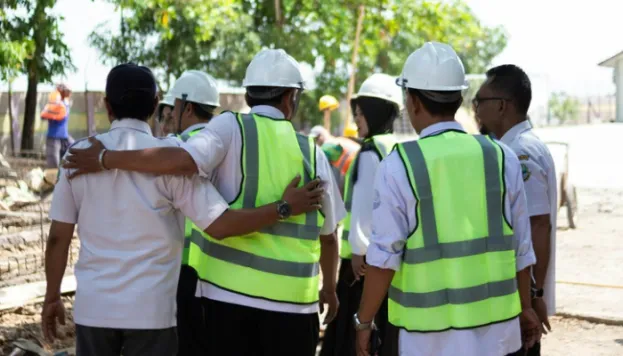
Living wages are foundational to enabling people to live well. They ensure workers and their families maintain a decent standard of living through economic change, while supporting the stability and resilience of the workforce companies depend on.
Corporate action remains minimal. Fewer than 5% of companies guarantee a living wage for their direct employees. Action across supply chains is even rarer, Only 3% of companies act on living wages in supply chains that together employ over 500 million workers. Until companies act on both, the people the transition most depends on will carry its costs without sharing in its benefits.
Good practice exists but remains isolated. Wage risks are most acute in supply chains, yet only 49 companies meet expectations on living wages there. Emerging practice shows what works: training suppliers on living wage standards (Nestlé), working with them to calculate wage gaps and revise pay (Unilever), enabling collective bargaining (Inditex), and committing to long-term purchasing agreements that reward good wage practices (H&M).

Bridging commitment and delivery in responsible AI
AI is reshaping how people work and participate in the digital economy, making effective governance essential to ensuring technological progress is trustworthy, inclusive and rights-respecting. As AI changes jobs and skills at pace, governance needs to anticipate who may be affected and how workers can be supported to participate in the transformation, not simply set principles for how AI should be used.
Principles are outpacing governance. Companies are developing AI principles faster than they are putting systems in place to govern their impacts, with only 12% meeting expectations on AI governance. Few identify who oversees AI risks, how principles apply across the AI lifecycle, or how external stakeholders are engaged.
Inclusion commitments aren’t backed by support. 83% of companies commit to diverse and inclusive workplaces, but only 39% support underrepresented employees through targeted technical or professional development, even as AI changes jobs and skills at pace.

Making the transition work for workers and communities
A transition that changes industries, jobs and communities cannot be considered successful if the people affected are left behind or expected to absorb the costs of change. Companies need to plan not only how they will decarbonise, but how workers and communities will participate in and benefit from that transformation moving forward.
Social impacts remain disconnected from climate strategy. Only around 5% of companies integrate impacts on workers and communities into their climate transition plans, while just 4% set measurable targets to manage those impacts.
Workforce support lags in carbon-intensive sectors. As these companies move away from fossil fuels, their workers face the greatest risk of job loss, yet only 22% of Oil & Gas companies and 16% of Steel companies commit to reskilling them. Across all 2,000 companies evaluated, just 10% commit to reskilling displaced workers and 6% to creating new jobs. Investing in reskilling protects livelihoods and keeps the skills companies need to build new low-carbon business.
Investing in people strengthens the transition
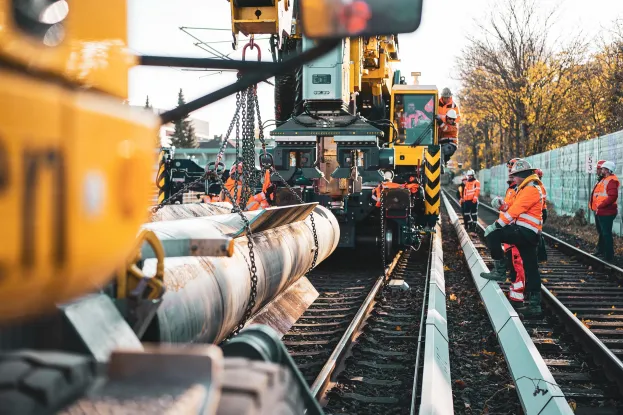
A credible transition plan is measured by what and who it protects. What separates corporate success from systemic failure is embedded social policies, deliberate stakeholder engagement and direct worker support. Closing this gap means anchoring transition plans in practical support for workers, communities, and supply chains so that people drive the transformation rather than being left behind.
Driving genuine accountability requires companies, investors, policymakers and civil society to pull in the same direction. Yet today’s transition architecture is built for consensus, which tends to settle at the lowest common denominator, and progress has been slow: oversight of social issues is rising, while positive outcomes for workers are not. The Integrated Transition Assessment is designed to break that pattern, as a company-level yardstick that starts measuring what happens to people now rather than waiting for agreement.
Through learning and consultation, we know that integrated transitions mark the next evolution in corporate accountability; moving past fragmented data to deliver a unified view of progress, connect long-term value creation, and answer the questions that should sit behind every decision: Who should benefit? Who bears the costs? And, whose voices should be heard?
Latest Updates





Subscribe to stay informed on our work
Keep up to date with all the latest from World Benchmarking Alliance