Gender equality as an enabler to solve the water crisis
Women bear a disproportionate burden of the global water crisis, and WBA data shows that giving them a greater voice in corporate governance significantly improves water stewardship outcomes.


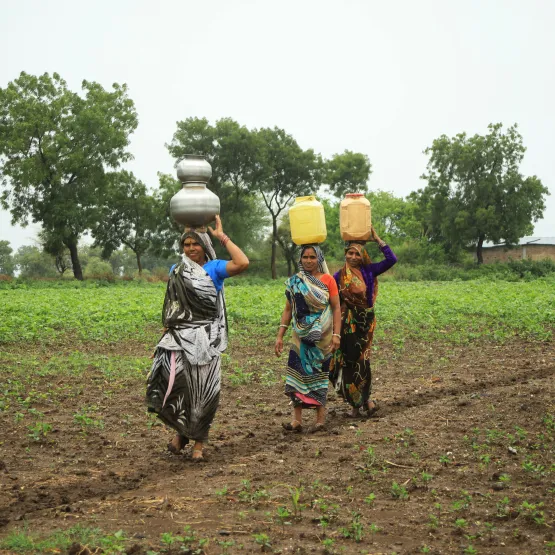
Women around the world spend an estimated 250 million hours per day collecting water. That is 250 million hours not spent in classrooms, workplaces, or communities; 250 million hours of lost opportunities, every single day.
The water and sanitation crisis affects everyone, with one in four people having no access to clean drinking water and two in five lacking access to adequate sanitation. But women and girls are disproportionately disadvantaged. In many countries they bear the primary responsibility of fetching water, which can be not only time-consuming but also dangerous and physically demanding.
Solving the water crisis is not only a matter of infrastructure and resources, it is also a matter of who makes decisions about water governance. Because water access is so often a woman’s responsibility, women’s voices must also be central to the decisions about how water is managed. Gender representation can strengthen both sustainable water management and access to water and sanitation.
The World Benchmarking Alliance’s (WBA) latest assessment of over 1000 of the world’s most influential corporates across 21 industries provides compelling evidence in this direction. We find that a 10-percentage-point increase in women’s representation on a company’s highest governance body leads to 26% higher odds that the company actively engages in water governance, for example, by monitoring and reporting on water use and setting clear-cut targets to reduce it. Collectively, these companies withdraw hundreds of thousands of gigaliters of water yearly, and at least 45% of them operate in water-stressed areas, making responsible water stewardship a critical sustainability issue. Women are already the main managers of water every day. With more women involved in water decision-making, even seemingly modest steps, such as placing water on a company’s sustainability agenda, can make a meaningful difference on the ground.
A similar, and in some cases stronger, pattern is observed amongst water distribution companies themselves. In our assessment of the 30 largest utilities, providing water services to more than 800 million people globally, companies with stronger performance on gender representation[1] also perform better on transparency and target-setting related to service adequacy and affordability. These targets aim to improve the quality and accessibility of their services by, for example, reducing leaks, optimizing water distribution, or lowering the bills of lower-income customers. Water suppliers with stronger gender representation scores also tend to perform better on stakeholder engagement. While our findings do not establish a direct causal link, women representation in decision-making and water management roles is likely to move the conversation beyond how much water is being consumed by a company to who bears the cost of water mismanagement impacts. Ensuring gender representation at all levels of decision-making increases the likelihood that water use decisions are made with greater sensitivity to the distributional and lived impacts of water use.
This is not only a matter of fairness. It is a step toward empowering those most affected to help solve the problems they understand best, and toward closing the gap between those who live the water crisis every day and those who make decisions about it.
[1] measured through leadership equality, professional development, recruitment practices, sex-disaggregated workforce data, freedom of association, and gender-responsive procurement

Subscribe to stay informed on our work
Keep up to date with all the latest from World Benchmarking Alliance