
Supply chain resilience at risk as human rights, climate and nature impacts go unmanaged
Only 10% of companies assess human rights risks in their supply chain, while only one in five trace their products to understand nature impacts.
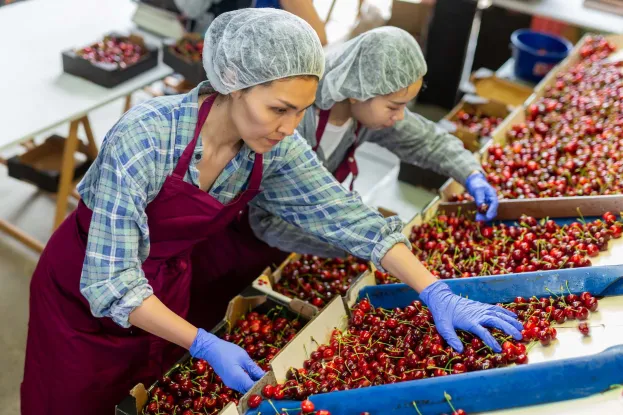
The world’s 2,000 most influential companies have a vast supply chain footprint. They employ an estimated 550 million workers, affect the livelihoods of many more and draw on natural resources from over 110 countries. Their upstream greenhouse gas (GHG) emissions are also significant, accounting for around 70% of emissions in sectors such as agricultural commodities, food and beverage.
These long and complex global supply chains create major risks for companies, from legal liability to price shocks. At the same time, companies shape real-world outcomes through their purchasing and supplier practices, affecting the wellbeing of workers, communities and ecosystems worldwide. To be responsible, companies must not only understand their supply chain risks and impacts across human rights, climate and nature, but also demonstrate they have mechanisms to manage them.
Accountability for impacts remains limited
Nearly half the 2,000 companies assessed have a supplier code of conduct, suggesting their awareness of the importance of supply chain impacts and risks. However, far fewer companies measure these impacts or take steps to manage supply chain risks. Our assessment draws from publicly disclosed data on: (1) human rights due diligence in supply chains, (2) scope 3 GHG reduction targets, and (3) traceability of nature impacts stemming from purchased products.
Companies’ duty to respect human rights in their operations and supply chains is a core tenet of the UN Guiding Principles on Business and Human Rights. Yet, only one in ten of the 2,000 companies identify and assess human rights risks in their supply chains, and only 14% in high-risk sectors such as food and agricultural products, apparel and footwear, automotive manufacturers and ICT manufacturers. Moreover, less than a tenth of companies also take action to prevent, mitigate or remediate their salient risks.
Decarbonising in line with the 1.5°C target is another critical corporate responsibility. To achieve this, companies must not only reduce own emissions but also work with suppliers to cut upstream scope 3 emissions. Encouragingly, 29% of over 1,300 real-economy companies expected to disclose upstream scope 3 emissions have valid near-term scope 3 GHG targets. Moreover, 95% of companies that set a target also report their GHG emissions by category of upstream activity, enabling more accurate hotspot identification and targeted action.
Only one in five companies currently trace products in their supply chains – a crucial step to understand product origins and nature impacts, reflecting growing expectations under the Global Biodiversity Framework. Most business-related environmental harm occurs out of sight, in farms, forests and fisheries far upstream. Without supply chain visibility, companies cannot detect or address issues such as illegal deforestation or water overuse. Among companies that do trace their products, nearly two thirds outline traceability systems, less than half disclose collected data or supplier engagement, and only 13% identify their suppliers, leaving transparency and accountability for nature impacts severely limited.
Frontrunners in supply chain practices
Several companies demonstrate best practices, setting standards for others to follow. Food and agriculture companies such as Barry Callebaut and Nestlé, for instance, not only engage with rightsholders as part of their human rights due diligence but also collaborate with suppliers to close living income gaps of producers in the supply chains. Other companies, such as Charoen Pokphand Foods (CPF), Holcim and Mowi, are actively engaging with suppliers and incentivising them to reduce scope 3 carbon emissions in their supply chains.
Norwegian aluminium and renewable energy company Norsk Hydro demonstrates strong traceability practices that allow it to monitor environmental impacts in its supply chain. The company explains how its supply chain is structured, as well as engages suppliers through onboarding screenings, audits and corrective action plans to improve performance. Other companies, such as Danone, go further by collaborating with industry platforms or local non-profit organisations. Several companies including Adidas and Fast Retailing disclose the factories and suppliers in their supply chain, enabling external stakeholders to independently verify their sourcing practices and assess human rights and nature-related risks.
Taking responsibility across human rights, climate and nature
While these examples are encouraging, only 20 companies in our assessment show indications of considering supply chain impacts and risks across all three areas: human rights, climate and nature. Many of these companies are reputation-sensitive food producers and retailers with long and complex supply chains, which need to manage risks across multiple geographies and dimensions. Also, half of these companies are headquartered in the EU, showing how crucial the regulatory environment is in shaping company behaviour.
The future of responsible business hinges on integrating human rights, climate and nature into supply chain action. Leading companies are already setting new standards, responding to growing expectations from investors, consumers and regulators. Those that act across these themes can multiply the benefits of responsible business, strengthening resilience, managing risks and securing sustainable growth that recognises the interdependence of people and planet.
Up to 30% of the annual clean-energy investment gap required by 2030 could be closed if companies scaled investment to levels already proven in the market and observed across sectors, moving the world closer to a 1.5°C-aligned pathway.
Read more
So far only 9% of companies quantify their nature-related risks, leaving the path wide open for early movers.
Read more
Less than 5% of major companies pay a living wage, leaving households worldwide under growing financial strain.
Read more
While 38% of major tech companies publish their ethical AI principles, none of them disclose their human rights impact assessment results, exposing weak accountability across the sector
Read more

Subscribe to stay informed on our work
Keep up to date with all the latest from World Benchmarking Alliance