
Powering the transition
Our new report, Powering the transition, draws on data from more than 600 of the world's most influential companies to ask whether the businesses that will largely decide the fate of the COP31 Presidency's electrification target are ready to deliver it.
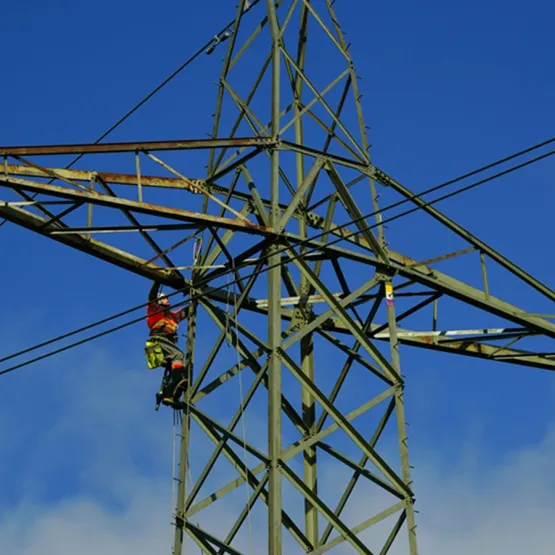
Electrification is set to be one of the defining conversations at COP31 in Antalya. The Presidency's 35x35 pledge aims to raise electricity's share of final energy consumption from around 23% today to 35% by 2035, in line with IEA and IRENA pathways consistent with 1.5°C. The IEA estimates that 33% could already be electrified cost-effectively with existing technologies, which puts the target within reach.
Governments set the direction, but companies decide which technologies to deploy, where to invest and how fast to move away from fossil fuels. They make the cars and buildings, run the data centers, mine the minerals that batteries and grids depend on, and generate the power. Our analysis finds that they are building the foundations for a low-carbon transition, but are not yet ready to deliver 35x35. The findings show why.
Automakers are moving backwards when they need to accelerate
Transport is one of the three end-use sectors at the heart of 35x35, and for automakers electrification is a question of what they sell. Yet among the 18 automakers with comparable data, low-carbon vehicles rose only from 10.5% of sales in 2023 to 13.3% in 2025, while electric cars reached a quarter of global new car sales. Excluding Tesla and BYD, low-carbon vehicles made up just 8% of the remaining automakers' sales.
Some companies are going in reverse; low-carbon shares fell at Mercedes-Benz, Mahindra and Mahindra, Nissan and Mitsubishi Motors. Commitments are slipping too. Six of the 14 automakers with electrification targets in 2023, including Volkswagen, Ford, Hyundai, Kia, Nissan and Mercedes-Benz, have since weakened or dropped them, as policy signals in key markets softened. Besides all-electric Tesla, only Honda among the 30 automakers assessed has a time-bound commitment to phase out internal combustion vehicles globally.
AI is driving demand faster than grids are decarbonising
The 200 leading digital companies already use close to 500 TWh of electricity a year, around 1.7% of global consumption, and data centre demand is projected to roughly double by 2030. The sector is also the world’s largest corporate buyer of renewable electricity, with 25 companies reporting 100% renewable power. But buying renewable electricity is not the same as running on a clean grid, and large-scale AI has overturned the steady-growth assumptions on which many digital companies built their emissions pathways. Between 2020 and 2024, the operational emissions of Amazon, Microsoft, Alphabet and Meta, including location-based Scope 2 emissions, roughly doubled, reaching between 192% (Alphabet) and 239% (Microsoft) of their 2020 levels. Over the same period, those of large telecommunications companies fell to 89%.
AI is not the only driver, but the gap signals the scale of recent demand growth among the largest cloud and AI providers. Where demand grows faster than clean power is deployed, operational emissions can rise even as renewable procurement expands. Unless new demand is matched by new clean capacity, AI risks competing with the electrification of transport, buildings and industry rather than supporting it.
Most companies cannot yet show what powers them
The climate benefits of electrification grow with the share of clean power behind it, and across sectors the first obstacle is transparency. In real estate, construction and engineering, construction materials, and metals and mining, between 46% and 64% of companies do not disclose their renewable energy share. Where they do, renewables cover half or more of energy use for fewer than one in five companies. ICT is the exception, with 74 of 200 digital companies at 50% or above.
The same gap runs through investment. Even where companies report low-carbon capex, they rarely show how much goes to electrification, and automakers and utilities direct on average 32% and 52% of capex to low-carbon investment, against sectoral expectations of 80% and 95%. On the supply side, around 2,500 GW of projects wait in grid connection queues, and the producers of the minerals that batteries and grids depend on are among the least prepared companies we assess.
Clean energy is scaling, but critical bottlenecks remain
Renewables overtook coal as the largest source of global electricity in 2025. Clean technology manufacturers in WBA’s assessment tripled annual wind and solar sales between 2019 and 2024, from 54.2 GW to 152.3 GW. Electric utilities are the most advanced sector assessed, yet only 28 of 89 are implementing substantial decarbonisation levers.
From ambition to action
35x35 gives governments and companies a shared, measurable reference point. Turning it into delivery will take coordinated action:
- Companies should make electrification an explicit, time-bound objective in their transition plans, disclose the capital they direct to it and, as large electricity users, match new demand with additional clean capacity.
- Investors can ask for electrification-specific capex and reward companies whose spending matches their stated ambition.
- Policymakers can provide stable, long-term signals across end-use sectors, accelerate grid investment and connection reform, strengthen critical minerals supply chains, and make clear that new electricity should be clean.
COP31 is the moment to turn the 35x35 ambition into measurable action. Whether it succeeds will depend not only on government commitments, but on the investment decisions and transition plans of the companies that will power the transition.

Subscribe to stay informed on our work
Keep up to date with all the latest from World Benchmarking Alliance
