
Insights and highlights: 2025 Nairobi Action Forum
In June 2025, the World Benchmarking Alliance brought its annual Action Forum to Nairobi – a deliberate choice to place local perspectives at the heart of global sustainability conversations. Leaders from Kenya’s digital, food and agriculture, and urban development sectors gathered with policymakers, civil society, and development partners for a day of open dialogue.
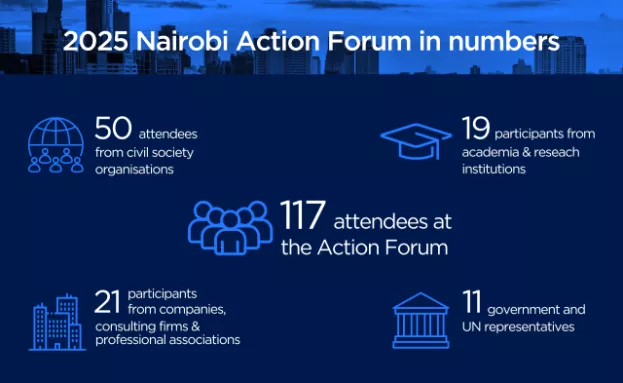
In June 2025, the World Benchmarking Alliance brought its annual Action Forum to Nairobi – a deliberate choice to place local perspectives at the heart of global sustainability conversations. Leaders from Kenya’s digital, food and agriculture, and urban development sectors gathered with policymakers, civil society, and development partners for a day of open dialogue.
The aim was simple yet ambitious: listen deeply, understand local priorities, and explore how businesses can be more accountable in shaping a sustainable future.
Potential follow-up and action points
Both through the Action Forum itself, and the one-to-one meetings that the team had with several Kenyan stakeholders, the team had received several suggestions on CSOs and other organizations to further our work in Kenya.
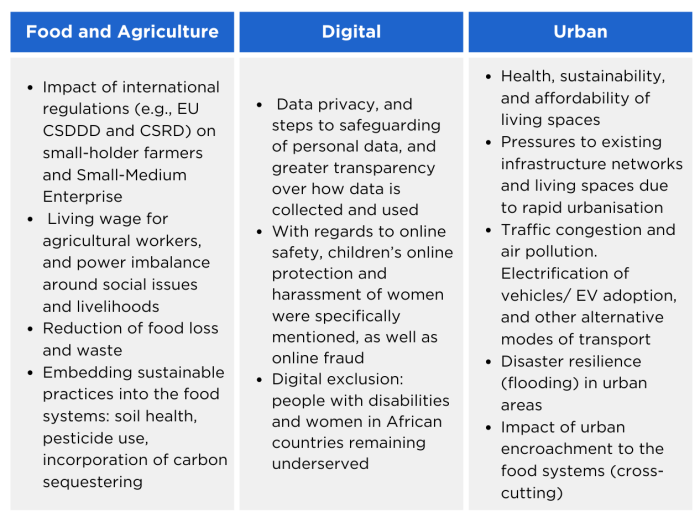
General agreement on the significance of companies in advancing the SDGs, but there is a need to define how this would look like in the country. A key recommendation was to articulate 3-4 issues for companies to focus on, before proceeding with further asks. Some key issues and questions that were raised across the three transformations’ session:
Businesses, especially those with constrained resources might be reluctant to spend resources pre-emptively for sustainability efforts and opted instead for a more reactive approach. Building a case where pre-emptive incorporation of sustainability practices into a businesses’ operations sooner is beneficial for them could help make a case for wider adoption of sustainability practices. A comparative analysis on African companies and their counterparts in another comparable world region could also contribute to build such a case.
New sustainability requirements are often implemented without consulting those that are more affected. Participants called for a more inclusive approach to sustainability and standard setting, one that invites local stakeholders to the table before rules are enforced. A study on the impact of international sustainability standards, including cataloguing of best practices in various sectors, could build a case to have local voices heard in international decision-making and allow for a more inclusive process in setting international sustainability standards. Establishing a platform for equal exchange of opinions can help advance discussions
In line with some of the inputs around ‘the need to contextualize’ our findings, and ‘locally driven issue prioritization’, explore partnerships to help with adapting global frameworks to fit local contexts. Translation of findings to more accessible formats, such as stories, infographics, briefings, and other such products, to make it easier for data to be used for advocacy purposes.

Subscribe to stay informed on our work
Keep up to date with all the latest from World Benchmarking Alliance