
2021 Just Transition Assessment
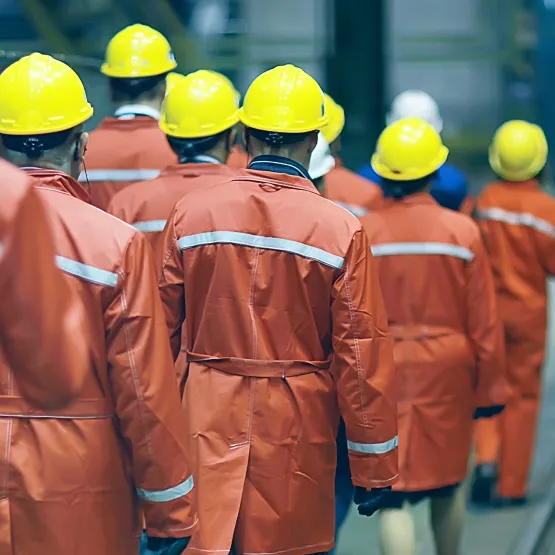
The World Benchmarking Alliance’s pilot Just Transition Assessment covers 180 companies across three sectors: 100 oil and gas companies, 50 electric utilities and 30 automotive manufacturers. These assessments look at the social elements of the companies’ transition to a low-carbon future. They are based on the companies’ publicly available disclosures, which are assessed against our core social indicators and our new just transition indicators.
In this report, we present five key thematic findings showing how these 180 companies can increase their ambition and action towards a transition to a low-carbon future that is just and equitable for the people and communities at risk of being negatively affected by it. We also present a deep dive into the findings by sector, with case studies and good practice examples that highlight areas where companies are stepping up and how their peers can follow. As this is a set of pilot assessments, rather than a ranking, we present the companies' results in tables in the annexes to this report and in an online data file that is free and publicly available.
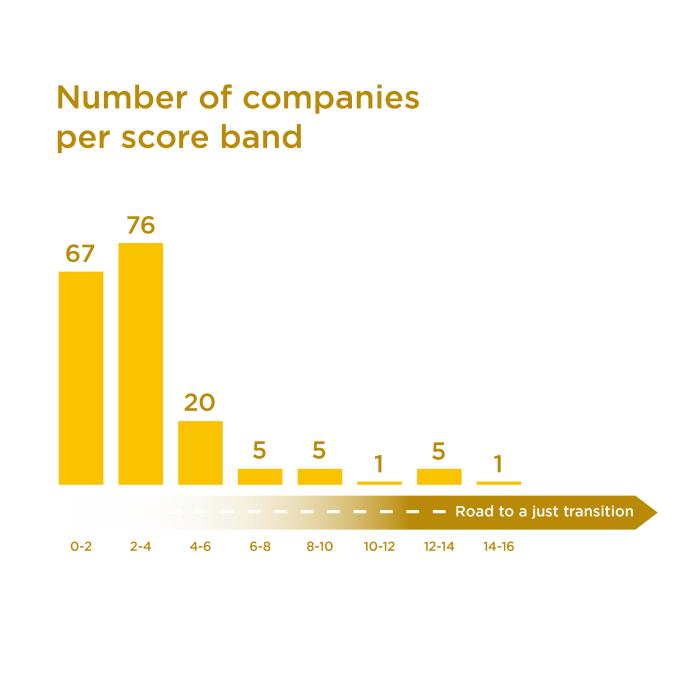
A ‘just transition’ envisions resilient and thriving workers and communities, existing within the 1.5°C boundaries set out globally in the Paris Agreement. Our first assessments of companies’ contributions to a just transition show a striking and systemic lack of action by companies to identify, prepare for and mitigate the social impacts of their low-carbon strategies. Only nine of the 180 companies assessed score above 50% on their current performance across our six just transition indicators. This puts over 11 million workersat risk of unemployment.
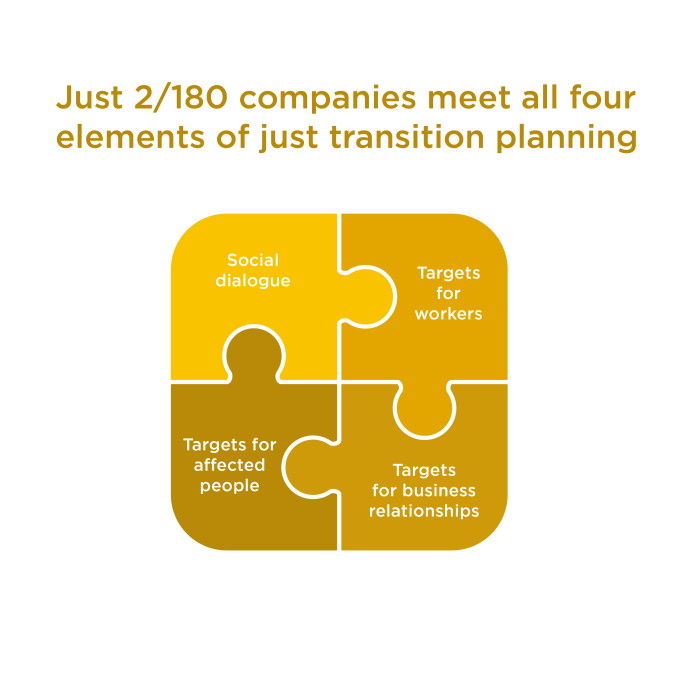 The voices and needs of workers, communities and the most vulnerable are being excluded from decisions that will have a disproportionate impact on their livelihoods. Planning for a just transition is only effective when informed by negotiation through social dialogue, stakeholder engagement and social impact mitigation. Companies’ performances on these actions and processes are shockingly low. Only two of the 180 companies assessed meet all the fundamental requirements of just transition planning. Only 15 companies include the voices of those who will be most impacted in their plans.
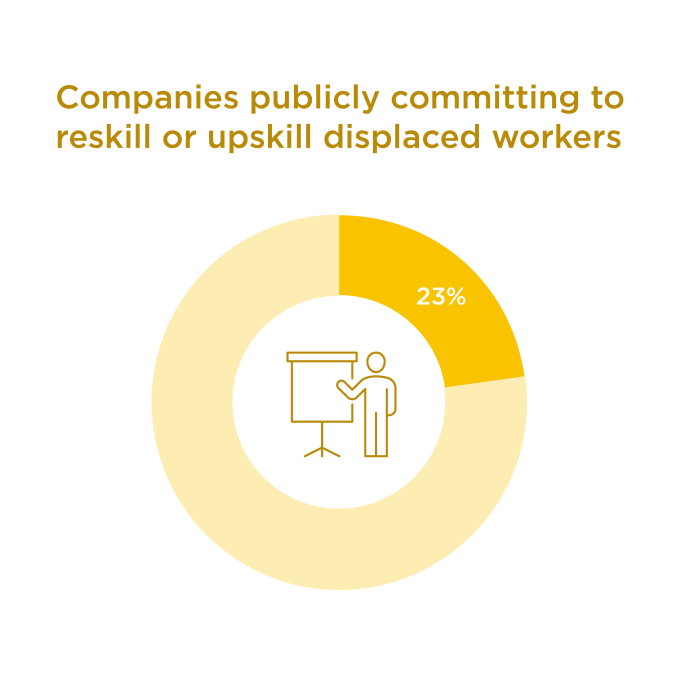
Workers are fundamental in driving and implementing the transition of their sectors. For workers to be effective and well-equipped agents of change towards a sustainable future, companies must ensure they have access to green and decent jobs. These jobs must support a balanced and inclusive workforce and be enabled through skills development and training. Only 23% of the 180 companies assessed have a public commitment to reskill or upskill workers displaced by the low-carbon transition. Companies need to act now to reimagine and reshape their workforce for a low-carbon economy, or risk a stranded workforce which would have momentous impact on supply chains and energy access.
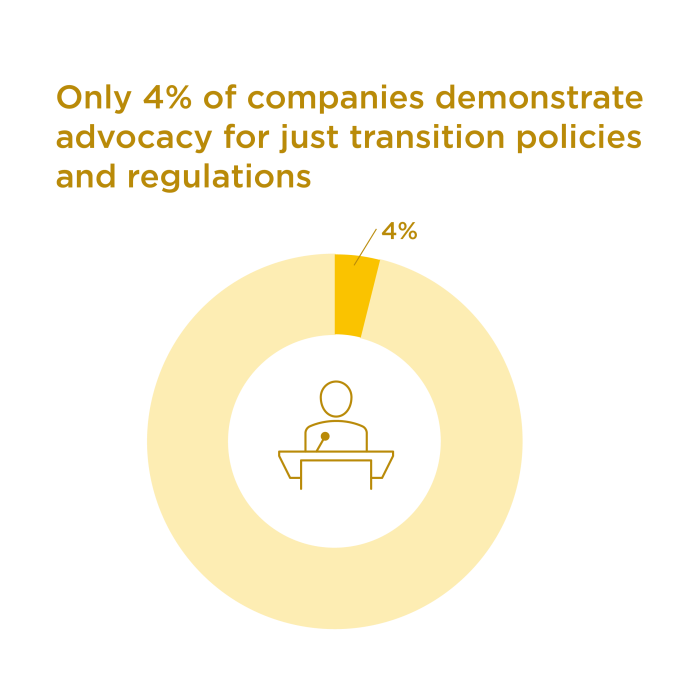
Accountability for ensuring a just and equitable transition does not lie only with the private sector. But companies hold huge influence over the world’s ability to transition to a low-carbon economy. They play a key role in contributing to social protection and have the responsibility to mitigate and manage their social impacts. Through lobbying, companies can either advocate for or undermine the potential of policies and regulations. Despite this, only 11 of the 180 companies assessed demonstrate how they contribute to addressing the impact of the low-carbon transition on workers’ social protection, and just seven companies show that they advocate for policies and regulations for a just transition.
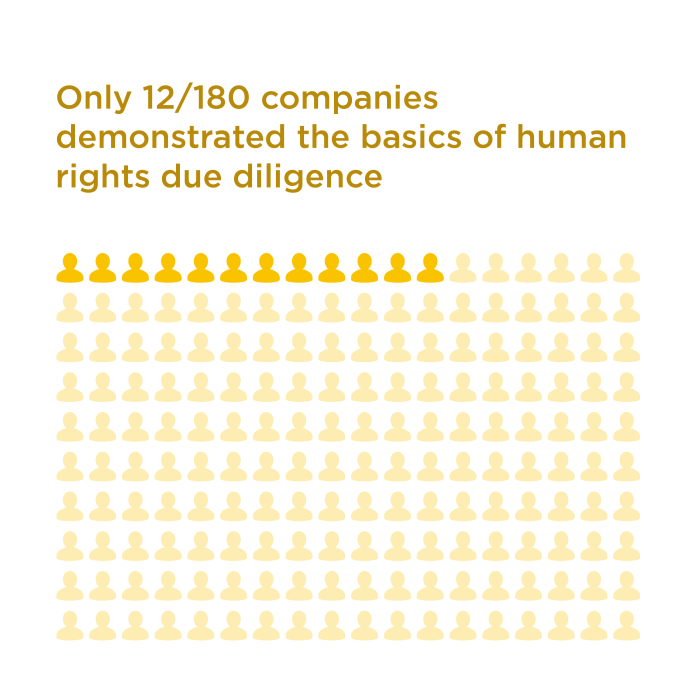
Though the energy transition has the potential to be globally transformative, it still comes with many risks. Companies must take rapid steps to become aware of the human rights risks in their operations and supply chain and act to mitigate these. Beyond the 11.5 million people directly employed by the 180 high-emitting companies assessed, millions are likely to be affected through the operations and supply chains of these companies. Our assessments highlight a gap between corporate commitments to respect human rights and the actual processes companies have in place to ensure this in practice. 24% of the companies score zero on all human rights indicators and only 12 companies demonstrate the basics of identifying and managing human rights risks.

Subscribe to stay informed on our work
Keep up to date with all the latest from World Benchmarking Alliance