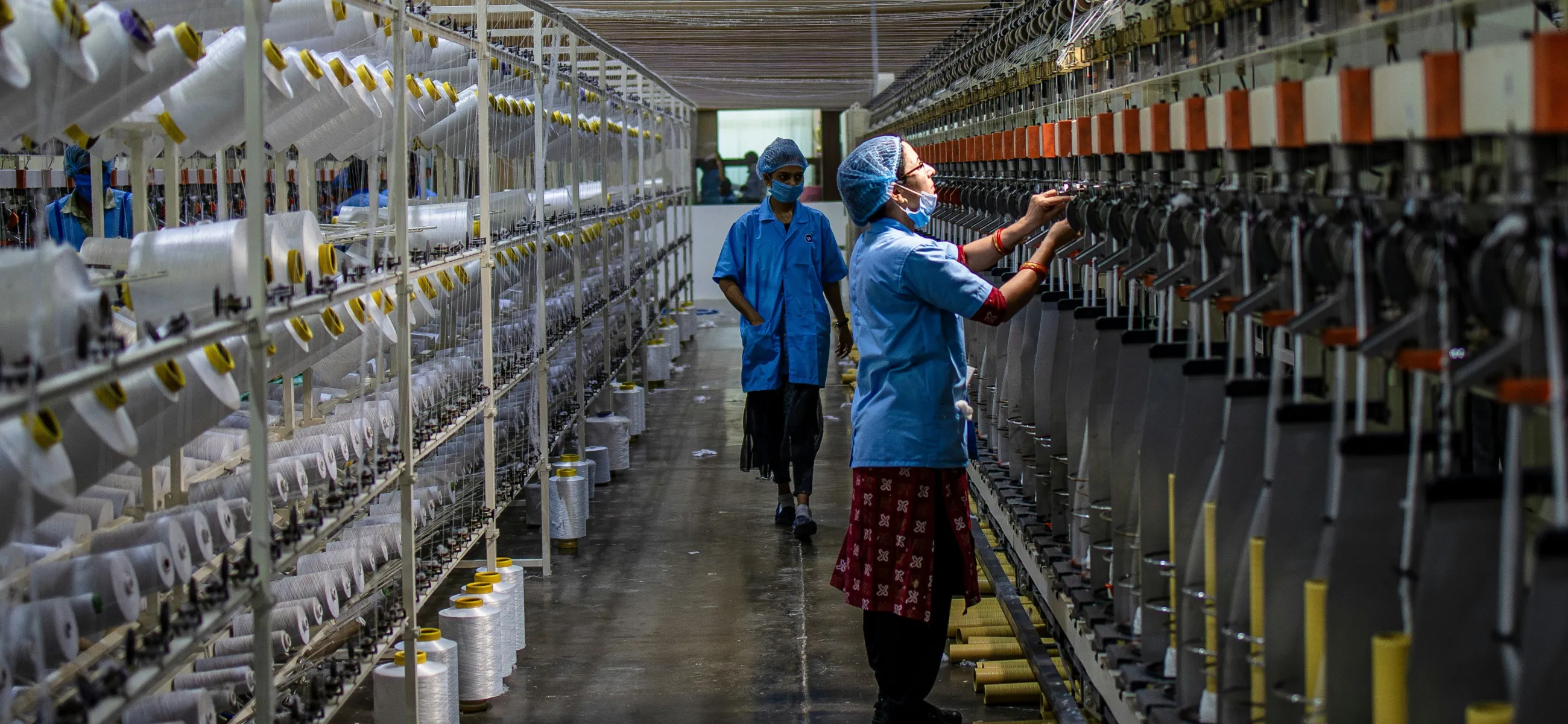
Measuring companies at scale on their baseline gender equality performance.
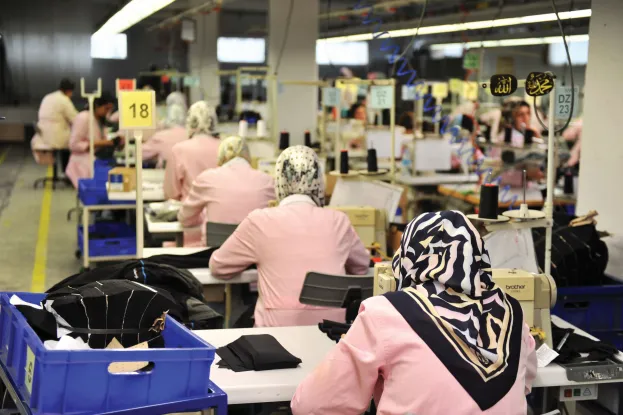
While the overall performance of the 2,000 companies on gender falls short of expectations, several sectors are leading the way. Apparel & Footwear, Electronics, Personal & Household Products, and Pharmaceuticals & Biotechnology have the highest average total score in this year’s Gender Assessment.
Fewer than a quarter of the 2,000 companies disclose sex-disaggregated data on key issues like the gender pay gap, promotions, and grievances. Without this data, it is difficult to assess progress or understand how far there is still to go. Fortunately, at least one company reports on each of these topics, paving the way for its peers to follow.
The most common way companies are responding to unpaid care is by offering flexible working arrangements, followed by childcare and family support. However, the provision of maternity and paternity leave across global operations remains inconsistent, with companies often relying only on local legislation. This presents a critical opportunity for policymakers and companies to work together to raise standards and drive more equitable outcomes.
Although 22% of companies have achieved gender balance at the board level, this progress has yet to be replicated consistently across other layers of leadership in the company.

The Gender Assessment applies a reduced set of Gender Benchmark Methodology indicators to all 2,000 companies. In total, we assessed them on 51 elements across five measurement areas: governance and strategy, representation, compensation and benefits, health and wellbeing, and violence and harassment.
| Company Name | Total Score | Governance and strategy | Representation | Compensation and benefits | Health and well-being | Violence and harassment | |
|---|---|---|---|---|---|---|---|
Surgutneftegas
|
0.0/100 |
0.0/100 |
0.0/100 |
0.0/100 |
0.0/100 |
0.0/100 |
|
CSSC Holdings
|
0.0/100 |
0.0/100 |
0.0/100 |
0.0/100 |
0.0/100 |
0.0/100 |
|
China Unicom
|
3.1/100 |
0.0/100 |
4.2/100 |
0.0/100 |
11.1/100 |
0.0/100 |
|
Dongwon Industries
|
12.1/100 |
8.3/100 |
4.2/100 |
20.0/100 |
27.8/100 |
0.0/100 |
|
Bank of Shanghai
|
2.2/100 |
0.0/100 |
0.0/100 |
0.0/100 |
11.1/100 |
0.0/100 |
|
Kweichow Moutai
|
6.7/100 |
0.0/100 |
0.0/100 |
0.0/100 |
33.3/100 |
0.0/100 |
|
China Pacific Insurance
|
5.3/100 |
0.0/100 |
4.2/100 |
0.0/100 |
22.2/100 |
0.0/100 |
|
Dhaka Power Distribution Company
|
0.0/100 |
0.0/100 |
0.0/100 |
0.0/100 |
0.0/100 |
0.0/100 |
|
Massachusetts PRIM
|
2.7/100 |
0.0/100 |
8.3/100 |
5.0/100 |
0.0/100 |
0.0/100 |
|
Octopus Energy
|
1.8/100 |
0.0/100 |
4.2/100 |
5.0/100 |
0.0/100 |
0.0/100 |
Companies in this list have disclosure available in a language other than English. As WBA only assesses English-language disclosure, they have not been scored.
- |
ABC Mart |
Not Scored |
|
- |
AG2R LA MONDIALE |
Not Scored |
|
- |
Agirc-Arrco |
Not Scored |
|
- |
Agua y Saneamientos Argentinos |
Not Scored |
|
- |
Aurora Alimentos |
Not Scored |
|
- |
Bangladesh Road Transport Corp |
Not Scored |
|
- |
Baotou Steel |
Not Scored |
|
- |
Bayerische Versorgungskammer |
Not Scored |
|
- |
Bright Food Group |
Not Scored |
|
- |
Cemros |
Not Scored |
|
- |
CFE |
Not Scored |
|
- |
China Fortune Land Development |
Not Scored |
|
- |
China Merchants Group |
Not Scored |
|
- |
China Southern Power Grid |
Not Scored |
|
- |
Egyptian Electricity Holding Company |
Not Scored |
|
- |
EMT Madrid |
Not Scored |
|
- |
Even Construtora |
Not Scored |
|
- |
Federation of National Public Service Personnel Mutual Aid Associations |
Not Scored |
|
- |
Greenland Holdings |
Not Scored |
|
- |
Guangxi Shenglong Metallurgical |
Not Scored |
|
- |
Hunan Valin Steel |
Not Scored |
|
- |
Interaseo |
Not Scored |
|
- |
Lingyunhai Sugar Group |
Not Scored |
|
- |
Liuzhou Iron & Steel |
Not Scored |
|
- |
MegaFon |
Not Scored |
|
- |
MetrôRio |
Not Scored |
|
- |
MN |
Not Scored |
|
- |
Mosvodokanal |
Not Scored |
|
- |
National Federation of Mutual Aid Associations for Mutual Personnel |
Not Scored |
|
- |
Petroecuador |
Not Scored |
|
- |
Promotora Ambiental |
Not Scored |
|
- |
Saigon Water Corporation |
Not Scored |
|
- |
Sao Paulo Metro |
Not Scored |
|
- |
Shanghai Construction Group |
Not Scored |
|
- |
Shanghai Metro |
Not Scored |
|
- |
Shenzhen Metro Group |
Not Scored |
|
- |
SUBUS |
Not Scored |
|
- |
Suning.com |
Not Scored |
|
- |
Taikang |
Not Scored |
|
- |
Tianjin Rail Transit Group |
Not Scored |
|
- |
Transmilenio |
Not Scored |
|
- |
Wanda Group |
Not Scored |
|
- |
Wuchan Zhongda Group |
Not Scored |
|
- |
Xinyu Iron & Steel |
Not Scored |
|
- |
Yonghui Superstores |
Not Scored |
This measurement area looks at a company’s overall commitment to gender equality and women’s empowerment across its full value chain. It considers how gender equality and women’s empowerment is integrated into a company's governance structure, strategy, processes and management systems, as well as how a company engages with internal and external stakeholders to manage and improve its gender impacts. It also considers a company’s explicit commitment to gender equality and women’s empowerment in its supply chain.
This measurement area considers the fair representation of women across the workforce broadly, as well as the systemic discrimination that women have continued to face. It considers gender diversity in leadership, not just in governance bodies but also at all levels of leadership both in the workplace and in the supply chain. It also considers gender diversity in areas of a company where women have traditionally been discriminated against, including in traditionally male or female functions in the workplace, as well as in various aspects of a company’s supply chain including where women workers and entrepreneurs have not been appropriately treated or represented.
This measurement area considers the fair compensation of women and addresses the gender pay gap that persists globally. The issue of compensation and benefits manifests itself as a gender pay gap in a company’s workplace, while in a company’s supply chain the focus is on whether women are extended formal contracts and a living wage, both of which are inextricably linked to the gender pay gap. Further, this measurement area considers the key family-friendly benefits that companies and their suppliers should extend to their workers in order to support their unpaid care burden, which women disproportionately carry.
This measurement area considers the unique health and well-being needs of women workers, particularly those related to sexual and reproductive health, which are central to achieving gender equality and women’s empowerment. It explores the extent to which a company supports its women workers with critical health information and services, both in the workplace and in its supply chain. It also considers the health and safety of the work environment extended to women workers in the supply chain.
Violence and harassment in the world of work can constitute a human rights violation or abuse, and it is a threat to equal opportunities as well as unacceptable and incompatible with decent work. This measurement area looks at a spectrum of actions that a company can take to prevent violence and harassment in the workplace and in its supply chain. It also considers the process a company can implement to address and effectively remediate claims of violence and harassment.
WBA has taken a dual approach to assess companies on gender equality, aiming for both scale and depth in our efforts to hold companies accountable on how they companies respect and promote gender equality.
The Gender Benchmark applies the full methodology across approximately 100 companies from two sectors that have been identified as having a great impact, both positive and negative, on gender equality: apparel, and food and agriculture. It is important to note that while these two high-impact sectors have been selected to be included in the Gender Benchmark, the full methodology may be applied to companies across all sectors.
The Gender Assessment focuses on scale and involve a subset of the full Gender Benchmark Methodology applied to all of the 2,000 companies we assess – to determine where they are on their path towards gender equality.
Explore the latest data, download for further analysis or integrate into your own workflows using our API.

Keep up to date with all the latest from World Benchmarking Alliance